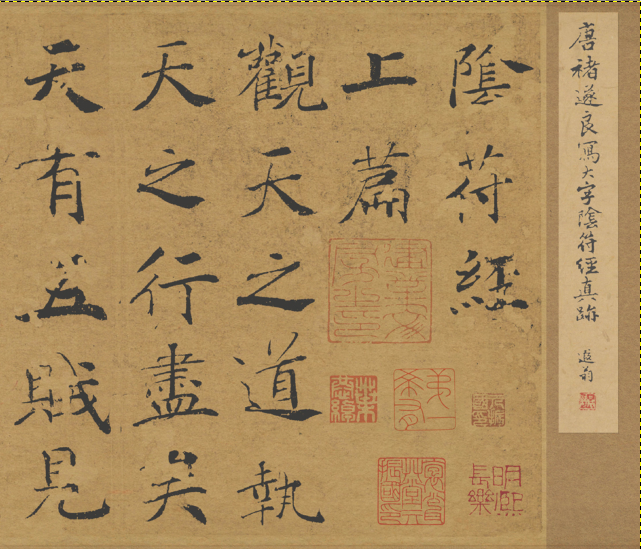
小論文《黃帝陰符經「五賊」之考據與研究》
黃帝陰符經「五賊」之考據與研究
亞利桑那州立大學哲學博士 鄭人豪
摘要
《黃帝陰符經》作為道家經典文獻,其”五賊”概念蘊含著深刻的哲學意蘊與多維實踐價值。本研究以文獻考據與哲學分析為核心,系統整理了”五賊”概念的文本源流、歷史演變及思想內涵。研究發現,”五賊”既指五行運作中的矛盾性力量,又像徵人性中的慾望與弱點,其本質是揭示事物對立統一規律的辯證思維框架。透過整合歷代注疏與跨學派比較,研究揭示”五賊”與道家五行、儒家五德等理論的內在關聯,闡明其作為道家哲學核心範疇的獨特地位。
研究進一步透過考據學方法與雙對數迴歸模型,建構”五賊”概念的多維解釋框架。在文本考據層面,系統梳理了從先秦至明清時期”五賊”釋義的演變軌跡,發現其內涵經歷了從自然物候到人性倫理的轉化過程;在理論分析層面,透過主成分分析法提煉”五賊”與陰陽五行、天人感應等理論的關聯要素,揭示其在政治哲學、軍事五略等領域的實踐維度。創新點體現在整合經學、子學、詮釋文獻,建立跨文本資料庫,並提出”認知安全系統”模型,為概念闡釋的可靠性提供方法論支持。
“五賊”理論的現代價值體現在三個層面:哲學層面,其辯證思維與現代系統論形成跨時空對話,為理解複雜系統演化提供哲學模型;實踐層面,其矛盾轉化機制為修身治國提供方法論啟示,如透過”制賊為用”實現慾望調控與社會治理;應用層面,與現代心理學、管理學的關聯研究優化其在情緒、決策等領域。研究結論強調,”五賊”作為中國古典思想中的”反者道之動”命題的具體呈現,不僅深化了對道家哲學體系的理解,更為傳統智慧的現代轉化提供了創新路徑,對構建具有中國特色的哲學話語體系具有重要學術價值。
關鍵字: 黃帝陰符經;五賊概念;道家哲學;文本考據;辯證思維;現代轉化
ABSTRACT
The Yellow Emperor Yin Fu Jing, as a classic Taoist literature, contains profound philosophical implications and multidimensional practical value in its concept of “Five Thieves”. This study focuses on literature review and philosophical analysis, systematically sorting out the textual origins, historical evolution, and ideological connotations of the concept of “Five Thieves”. Research has found that the “Five Thieves” not only refer to the contradictory forces in the operation of the Five Elements, but also symbolize the desires and weaknesses in human nature. Its essence is to reveal the dialectical thinking framework of the law of the unity of opposites in things. By integrating historical annotations and cross school comparisons, this study reveals the inherent relationship between the “Five Thieves” and theories such as the Five Elements of Taoism and the Five Virtues of Confucianism, and elucidates their unique position as the core category of Taoist philosophy.
Further research is conducted to construct a multidimensional explanatory framework for the concept of “Five Thieves” through textual research methods and double logarithmic regression models. At the level of textual research, the evolution trajectory of the definition of “Five Thieves” from the pre Qin to the Ming and Qing dynasties has been systematically sorted out, and it has been found that its connotation has undergone a transformation process from natural phenology to human ethics; At the theoretical analysis level, the principal component analysis method is used to extract the relevant elements between the “Five Thieves” and theories such as Yin Yang and Five Elements, and the correspondence between heaven and man, revealing their practical dimensions in political philosophy, military strategy, and other fields. The innovation lies in integrating literature from classics, sub disciplines, and Taoism, establishing a cross text database, and proposing a “cognitive security system” model to provide methodological support for the reliability of concept interpretation.
The modern value of the “Five Thieves” theory is reflected in three aspects: at the philosophical level, its dialectical thinking forms a cross temporal dialogue with modern systems theory, providing a philosophical model for understanding the evolution of complex systems; On the practical level, the mechanism of contradiction transformation provides methodological inspiration for cultivating oneself and governing the country, such as achieving desire regulation and social governance through “using thieves as tools”; At the application level, research related to modern psychology and management reveals its potential for transformation in areas such as emotional management and decision optimization. The research conclusion emphasizes that the specific presentation of the “Five Thieves” as a proposition of the “movement against the Tao” in classical Chinese thought not only deepens the understanding of the Taoist philosophical system, but also provides an innovative path for the modern transformation of traditional wisdom, and has important academic value for constructing a philosophical discourse system with Chinese characteristics.
Keywords: Huangdi Yin Fu Jing; The concept of five thieves; Taoist philosophy; Textual research; Dialectical thinking; modern transformation